
Vision
The chemistry that built life is now engineering immunology
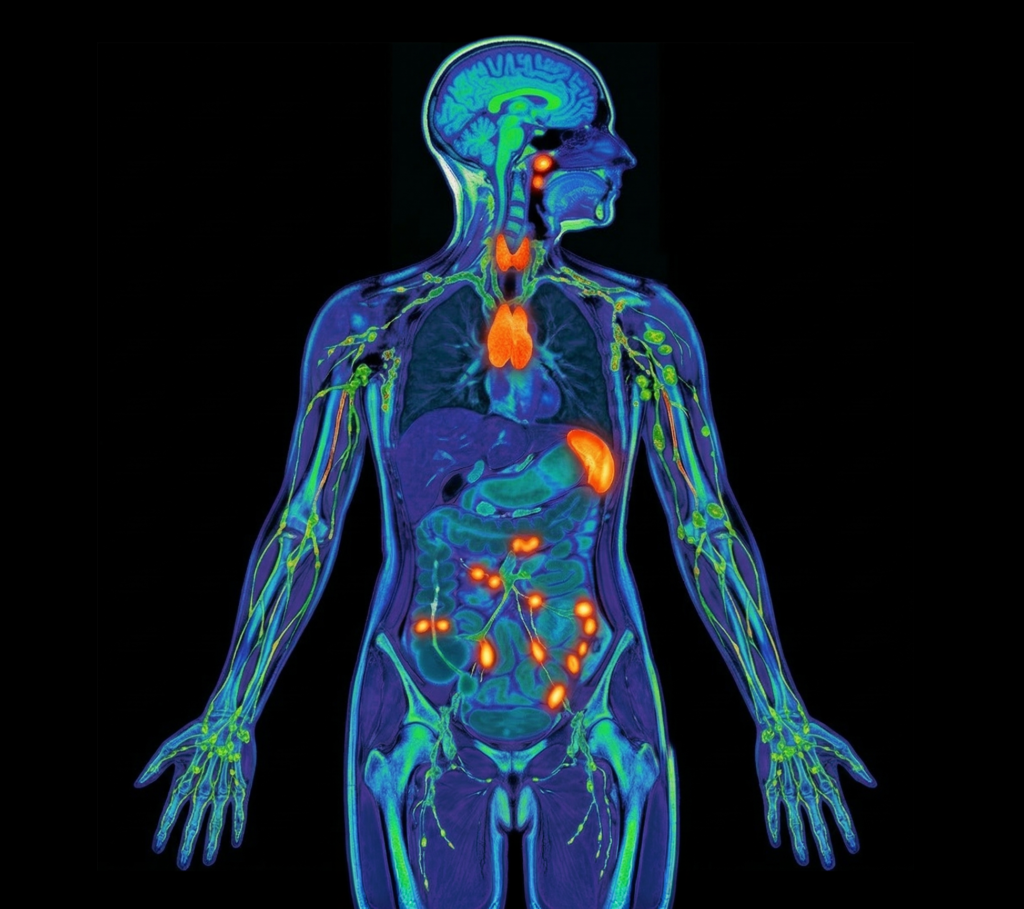
Biology must follow physical laws.
We just haven’t behaved as though it does, defaulting instead to trial and error, hoping that enough experimentation would eventually reveal patterns we could use.
The immune system is where the cost of not knowing them is arguably most consequential. It is biology’s most complex adaptive system: 1.8 trillion cells constantly surveilling for threats, coordinating defence mechanisms, and adapting to everything the world throws at them. And yet we still can’t engineer its responses predictably.
The question has never been whether those laws exist. The question is whether we have the right tools to find them.
Consider how every major law of nature was uncovered. Archimedes needed an object of constant weight he could systematically vary in size and shape, immersing it in water, observing what changed and what didn’t.
From one probe, systematically varied, to one universal law: the upward buoyant force exerted on a body immersed in a fluid, whether fully or partially, is equal to the weight of the fluid that the body displaces.
From that equation came the ability to predict, from an object’s physical properties and the density of the fluid it enters, the exact upward force it will experience and whether it will float.
Every major technological breakthrough of the last century traces back to the same sequence: observe the universe, write it in mathematics, build from it relentlessly.
Einstein, Turing, Kilby, Noyce did not stumble onto relativity, computation, or the transistor. They derived them. From heterogeneous catalysis to integrated circuits to the internet, the 20th century was an engineering consequence of rules that had been found, named, and understood.
Biology hasn’t had its equivalent. Not because the laws don’t exist, but because we haven’t used or found the right tools to uncover them.
To find a law, you need a tool that can be varied systematically.
In materials science, we can do this with inorganic compounds: take a crystalline structure and change its size, its shape, its ionic composition, one variable at a time, and observe what happens.
This is not possible with organic molecules. Change the configuration or composition of an organic molecule and you have a different molecule. Chirality can have a significant impact as we know from (R)-Thalidomide vs. (S)-Thalidomide. Charge, size, and geometry cannot be independently varied while keeping everything else constant. One configuration or composition yields one observation.
With inorganic nanoparticles, you can change size, charge, or crystal structure independently while keeping everything else constant. The probe remains the same class of material. Only the variable changes.
This is part of why immunology has remained, fundamentally, trial and error. We have extraordinary tools for other questions in biology: gene sequencing, CRISPR, proteomics.
For immune modulation, the probes we use are organic — be it antibodies, small molecules, peptides, or nucleic acids. They are static probes and yield only catalogued observations, not design rules.
So what do we do? We are convinced that replacing one black box with another won’t solve this.
AI models trained on data of questionable quality, producing outputs we cannot reverse-engineer, won’t help uncover fundamental laws. Even if a model yields a correct prediction, you cannot reverse-engineer how it reached the answer. Pattern matching is not the same as understanding.
If you can’t interrogate a system, you can’t comprehend it. If you can’t understand it, you can’t engineer it.
Iuvantium was founded on the conviction that immunobiology can be decoded through systematic interrogation, and that the probe to do so is inorganic in nature.
Biology’s origins are inorganic. 3.8 billion years ago, before DNA, before cells, before RNA, there were minerals. The very reactions that made life possible were catalysed by inorganic chemistry. Oxygen in our blood is transported bound to iron. Ion channels govern cellular excitability and communication. Trace metals catalyse nearly every major metabolic pathway.
The immune system is no different. Zinc is critical for T-cell development. Iron availability affects macrophage polarization. Magnesium regulates inflammasome activation. The NLRP3 inflammasome, one of the most important danger-sensing systems, responds to crystalline materials.
Iuvantium’s platform, iPrISM™, is built on exactly this foundation.
We begin by systematically interrogating.
We build functional inorganic nanoparticles with precisely controlled physicochemical properties: composition, surface chemistry, size, and charge — each independently tunable.
Unlike organic therapeutics, which derive activity from molecular recognition, iPrISM materials exert immune control through their physicochemical identity. By varying one property while holding others constant, we observe what changes and begin to derive design rules.
We synthesise and characterise the nanoparticles in-house, probe the immune system by exposing immune cells to the material, run immunological assays to determine their immune fingerprint, and feed the results back into the model.
Machine learning selects candidate materials in silico. Every design of experiments (DOE) cycle deepens our understanding of the relationship between physicochemistry and immune behaviour.
Supported by machine learning, we extract from it what human analysis alone cannot. Over time it becomes something no one else can easily replicate: a foundation model of the immune system, built from first principles.
Our early data suggest something profound and unimaginable: that certain physicochemical properties drive immune control that transcends individual biological variation. That there are design rules for immunobiology, encoded in the language of inorganic chemistry.
What we learn from interrogation, we encode.
Because the response is determined by physicochemical properties, anchored by the laws of physics and thermodynamics, it can be programmed.
Organic chemistry uses four dominant elements: carbon, hydrogen, oxygen, nitrogen. The periodic table has 118. That is the design space Iuvantium is opening.
We reverse engineer the inorganic modality to induce a precise immune phenotype, specific to the disease setting.
The probe that decodes the system ultimately becomes the drug that treats it.
The result is a precise, predictable immune phenotype, designed to specification
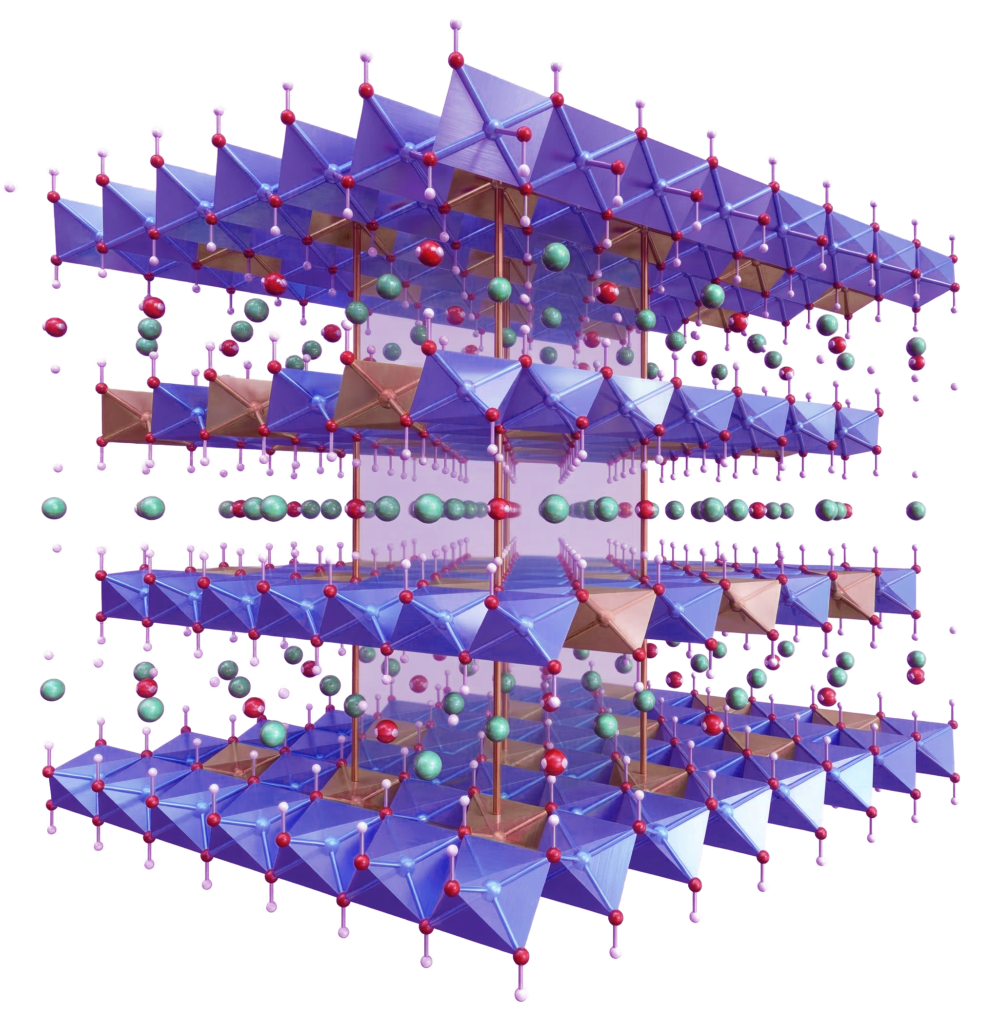
From laws to medicines.
We are taking the same approach that cracked catalysis: systematic interrogation, precise variation of physicochemical properties, a proprietary map between material properties and immune phenotype.
Next-generation adjuvants are the de-risked entry point. Beyond them, a pipeline of novel nanoscale immune modulators across infectious disease, oncology, and autoimmune disease, tailored to genomics, age, and immunological history. Prophylactic and therapeutic approaches designed from first principles, for everyone.
If we are right, precision immunology finally earns its name.
If we are right, and our early results suggest we are, we can engineer immune responses the way we engineer catalysts, semiconductors, and rocket engines: with mathematical precision and predictable outcomes.
We control how the immune system responds, not just what it responds to. We encode any immune phenotype — intentionally, reproducibly, across species and genetically diverse populations.
That is what it means to turn immunology into an engineering discipline. And it starts with the right probe.